Building with Claude
Building with Claude: Correct Markup Isn't a Working Feature
June 21, 2026 · 5 min read
Today was one of those debugging sessions that humbles you — or in this case, humbles the AI I was pairing with. What started as a simple “hey, can you check how this form works?” turned into a multi-hour investigation across email plumbing, magic links, and a YouTube embed that refused to cooperate. Here’s the honest account.
The problem we were solving
The site has a gated resources feature: users fill out a form, get an email with a single-use magic link, and click through to either download a file (PDF, brochure, case study) or watch an embedded video/webinar. I wanted to wire it up locally and actually test it end-to-end using MailCrab as a fake inbox.
Three distinct problems surfaced along the way:
- Emails weren’t going anywhere. The dev settings used Django’s console backend, so emails printed to the terminal instead of being deliverable.
- Document links 404’d. Clicking a download link for the data sheet threw a “Page not found,” raised by
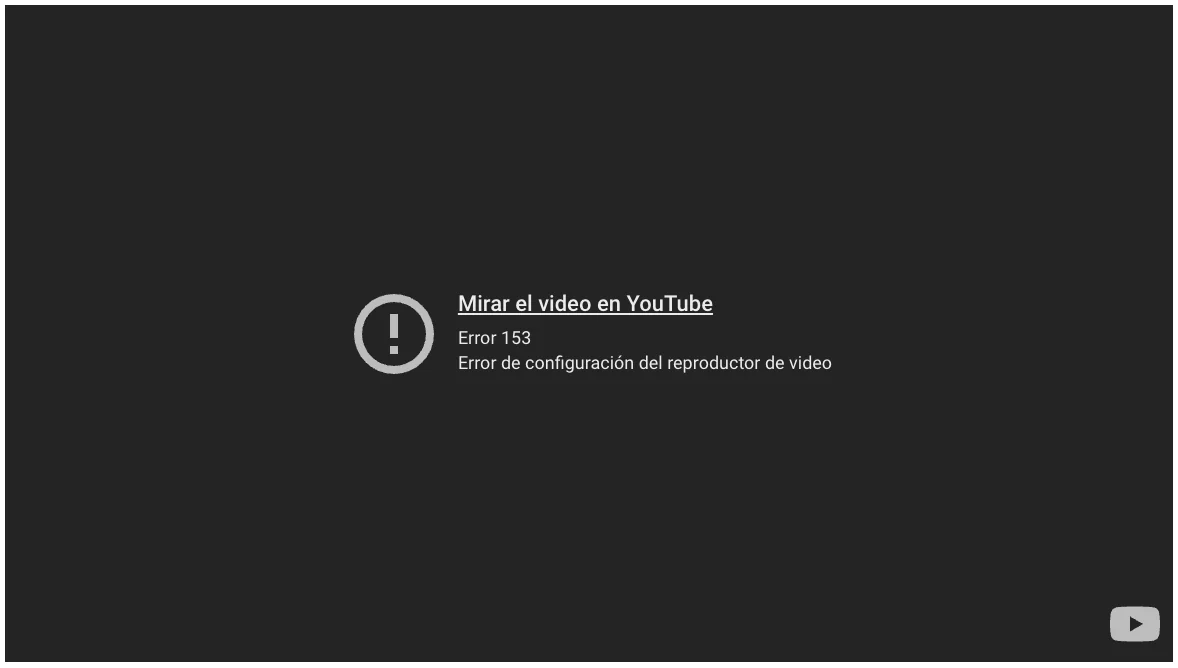
wagtail.views.serve. - Video links threw “Error 153 / Video player configuration error.” The webinar and video posts showed a broken player with only a “Watch on YouTube” fallback.
The approach we took
For email, the fix was straightforward — point Django at MailCrab’s SMTP server:
# dev.py
EMAIL_BACKEND = 'django.core.mail.backends.smtp.EmailBackend'
EMAIL_HOST = 'localhost'
EMAIL_PORT = 1025
EMAIL_USE_TLS = False
A quick send_mail() test confirmed delivery, and the magic-link flow lit up in MailCrab. Clean win.
The 404 was a data problem masquerading as a bug. The download view did this:
if self.document:
    ...           # serve the file
elif self.video_url:
    ...           # render the player
else:
    raise Http404 # ← every seed page landed here
None of the seed pages had a file attached, so every PDF resource fell straight through to a raw 404. We attached test documents and the downloads worked. (As a side note, that raise Http404 is a smell — a missing file should show a friendly message, not a dead end. Worth hardening later.)
Then came the video. The template embedded the URL directly:
<iframe src="{{ video_url }}" ...></iframe>Claude spotted that an editor pasting a watch?v=... link would break the iframe — YouTube needs the /embed/ form — so it wrote a normalizer to convert any YouTube or Vimeo URL into an embeddable one. Reasonable fix. And this is where things went off the rails.
Where it went wrong
Claude proved — three separate times, with curl against the live server — that we were emitting a perfectly valid youtube.com/embed/... iframe with a 200 status. From that, it concluded the app was correct and the problem must be my environment: first a browser extension, then a DNS/network filter. It told me, with real confidence, “No code change can fix this.”
A code change fixed it. Swapping youtube.com for youtube-nocookie.com made the video play instantly:
yt = re.search(
    r'(?:youtube(?:-nocookie)?\.com/(?:watch\?(?:.*&)?v=|embed/|shorts/)|youtu\.be/)([\w-]+)',
    url,
)
if yt:
    return f'https://www.youtube-nocookie.com/embed/{yt.group(1)}?rel=0'
The whole fix took thirty seconds. The certainty that it was hopeless cost far more.
The core mistake was conflating “the iframe src is well-formed” with “the embed will work.” Curling the server, seeing a syntactically valid URL, and declaring victory on our side — but a correct URL pointing at a domain that’s blocked or restricted in my context is still a broken feature. Correct markup is not a working feature. There was also too much anchoring on one theory at a time — watch-vs-embed, then extensions, then DNS — each presented as near-certain instead of held loosely.
What I got right
Worth calling out: I kept saying “I don’t think the iframe is working,” and I was right every single time. While Claude was busy proving the markup was fine, I was looking at the actual broken result on my screen. The person staring at the symptom usually has better data than the tool staring at the curl output — and it’s worth trusting that instinct even when the assistant sounds sure.
What was partially right
The cause probably was environmental — youtube-nocookie.com working while youtube.com didn’t is the classic signature of a blocklist (Pi-hole, NextDNS, a corporate filter) that covers the main domain but not the privacy one. So the instinct about where the failure lived wasn’t crazy. The botched leap was going from “the cause is environmental” to “there’s nothing we can do.” Those are completely different claims.
Key Lessons Learned
1. Correct markup is not a working feature. Proving the server emits a valid URL tells you the string is well-formed — nothing more. The only proof a feature works is the feature working in front of a real user. Curl can confirm syntax; it cannot confirm that YouTube will actually render the frame. When an assistant declares victory from a green checkmark on the server side, push it to look at the actual rendered result.
2. “It’s environmental” is a reason to harden, not to stop. When a failure traces back to the network, browser, or some external service, that’s not the end of the investigation — it’s the start of a resilience question. Can the code route around it? A nocookie domain, a fallback, a graceful error message? The job isn’t done when blame is located; it’s done when the feature survives the environment it’ll actually run in.
3. Try the cheap fix before assigning blame. The nocookie swap was thirty seconds of work, but it sat behind multiple confident speeches about my network. If a potential fix is cheaper than the argument about whose fault it is, just try it first. The cost asymmetry is enormous.
4. Trust the human watching the symptom. The assistant cycled through three explanations, each delivered as near-certain. Confidence framed as proof shuts down the conversation and wastes time when it’s wrong. I could see the broken player the whole time — “I don’t think it’s working” was better data than “I’ve proven it works.” When you’re the one looking at the real result, hold your ground.
The flip side of all this: we did ship real fixes. Email works through MailCrab, downloads serve actual files, and the video embed is now genuinely more robust — nocookie domain, referrer policy, proper attributes, and a normalizer that handles whatever URL an editor pastes. The work was good. The certainty was the bug.